

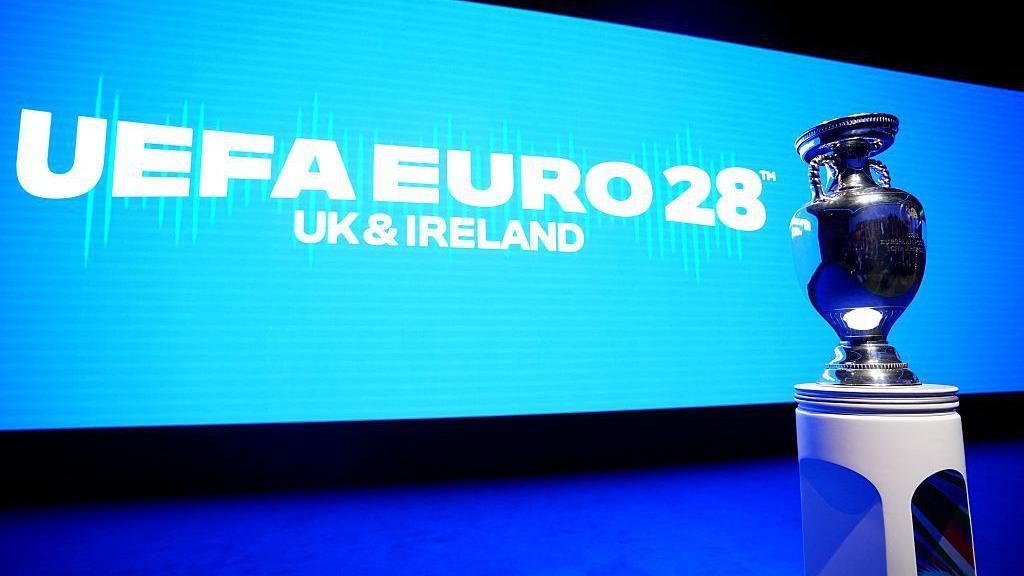
Euro 2028 will unfold across nine stadiums throughout the United Kingdom and Ireland.
Uefa plans to largely hold admission costs for the 2028 European Championships – signifying that fans will be able to buy five for the price of a single parking space at a World Cup stadium in the United States during the upcoming tournament.
The championship hosted across the British Isles and Ireland will see 40% of tickets reserved for the two lowest-priced "Fans First" categories.
For Euro 2024 in Germany, the cheapest tickets for the initial matches cost €30 (£26) and 60 euros (£52). Uefa aims to keep these below £30 and £60 respectively for 2028.
Organisers have planned four categories altogether, plus a small number of VIP+ tickets which will supply the revenue to freeze prices for the average supporter.
Group stage tickets in the more expensive categories at Euro 2024 were €150 (130 pounds) and €200 (£174). No detail on costs for these categories has yet been confirmed.
A Stark Contrast in Pricing Policy
This presents a marked difference to the controversial pricing policy at the upcoming FIFA World Cup in the United States, Mexico and Canada.
The cheapest group-stage games for England were originally priced at 220 US dollars (£167), with the most expensive being 700 dollars (£523).
Supporters at Euro 2028 might be able to attend all three group games at the Euros for the price of one mid-tier World Cup ticket.
Fifa eventually bowed to pressure regarding its cost structure and introduced a very limited number of $60 (45-pound) tickets for all 104 matches.
Beyond Tickets: High Parking Costs
But that is only the tip of the iceberg in terms of prices at the global tournament.
Reports indicate that the average charge for a parking spot at a World Cup match in the United States is now $175 (£133). Parking for group phase matches at MetLife Stadium outside New York are priced at 225 dollars (171 pounds).
Ticket Distribution and Fan Access
Organisers have pledged to set aside ten thousand passes for each country for each group stage fixture.
In contrast, Fifa allocated under 4,000 tickets to each national association at the World Cup, despite the majority of venues having a larger capacity.
Contentiously, authorities have used dynamic pricing during their sales windows, resulting in costs rising even higher.
The European tournament will not employ variable pricing and Uefa has promised that approximately 50% will be affordable.
Disabled Supporters
There has been controversy regarding the costs for supporters with disabilities, too. At the World Cup fans are required to pay the complete ticket price and there is no free ticket for a personal assistant.
At Euro 2028, fans with disabilities will be able to purchase the cheapest categories and can apply for a free pass for a companion.
Ticket Resale Policies
The official resale price for UEFA is set at the original price, whereas FIFA tickets can be resold on a secondary market at inflated prices, with Fifa taking a 30% cut on top of that.
Complete details of admission costs and sale periods for Euro 2028 are to be revealed in autumn 2027, with initial sales beginning following the group stage draw in December of that year.
Like the World Cup, costs for tickets for Euro 2028 will rise through the knockout rounds.
But tickets for the semi-finals and final of the European Championship will be nothing like those for the World Cup.
The most affordable fan tickets for the MetLife Stadium are priced at over three thousand pounds. During the last Euros, the same band of tickets cost €95 (82.50 pounds).
2028 European Championship Stadiums and Locations
- England: The new Everton ground, The Etihad Stadium, St James' Park, Spurs' arena, Villa Park, The national stadium.
- Scotland: Hampden Park, Glasgow.
- Wales: National Stadium of Wales, Cardiff.
- Republic of Ireland: The Aviva Stadium, Dublin.


